
Conversations with Ghosts
This is where I collect write after encounters with ghosts. Every book, artwork, gallery floor, landscape, every sentence typed…carries the imprint of another being, their thoughts, their memory, their words, their paint, their fleshy fingers. Often I find I cannot write because the topic of yesterday’s reading slips away, I’ve latched on to a more recent thought or idea. SO, alongside collecting word-works, this is also a space where I write new scraps with: the thing I'm reading now. The work I saw today. The phrase someone said that won't stop circling. Each pixelpage is a trace of that meeting, between the living and their hauntings. In Fragments, typos will be had. Errors made. Revisions necessary.
Fragment by fragment, ghost by ghost. I encounter them and something moves between us, a conversation that started before I arrived.
Selections (keep scrolling for the full list)
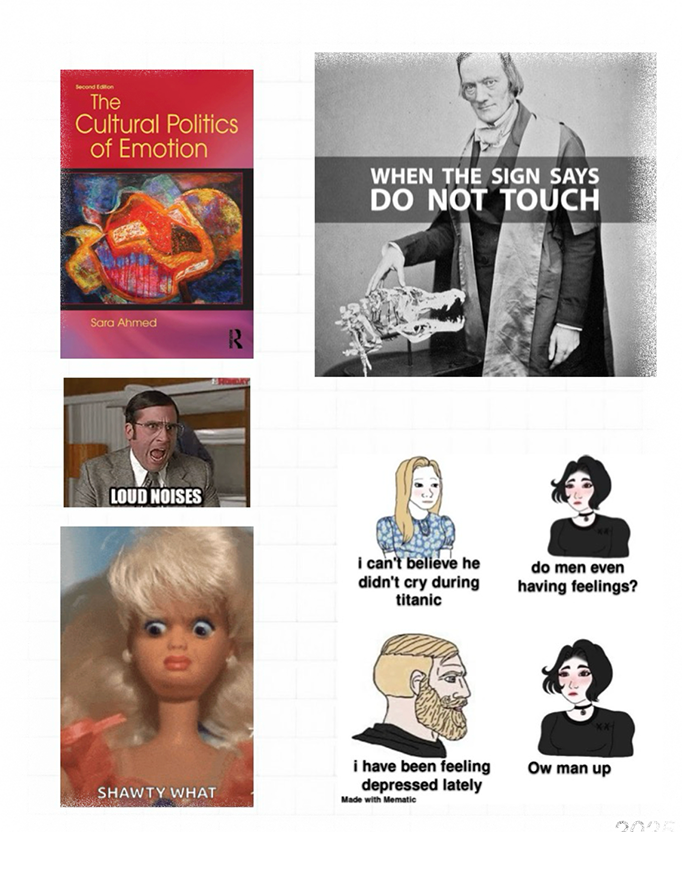
Conference Lecture

Zine, Drawings + Essay
Essay, sample of MA Thesis
Kara Walker - Event Horizon
fragment
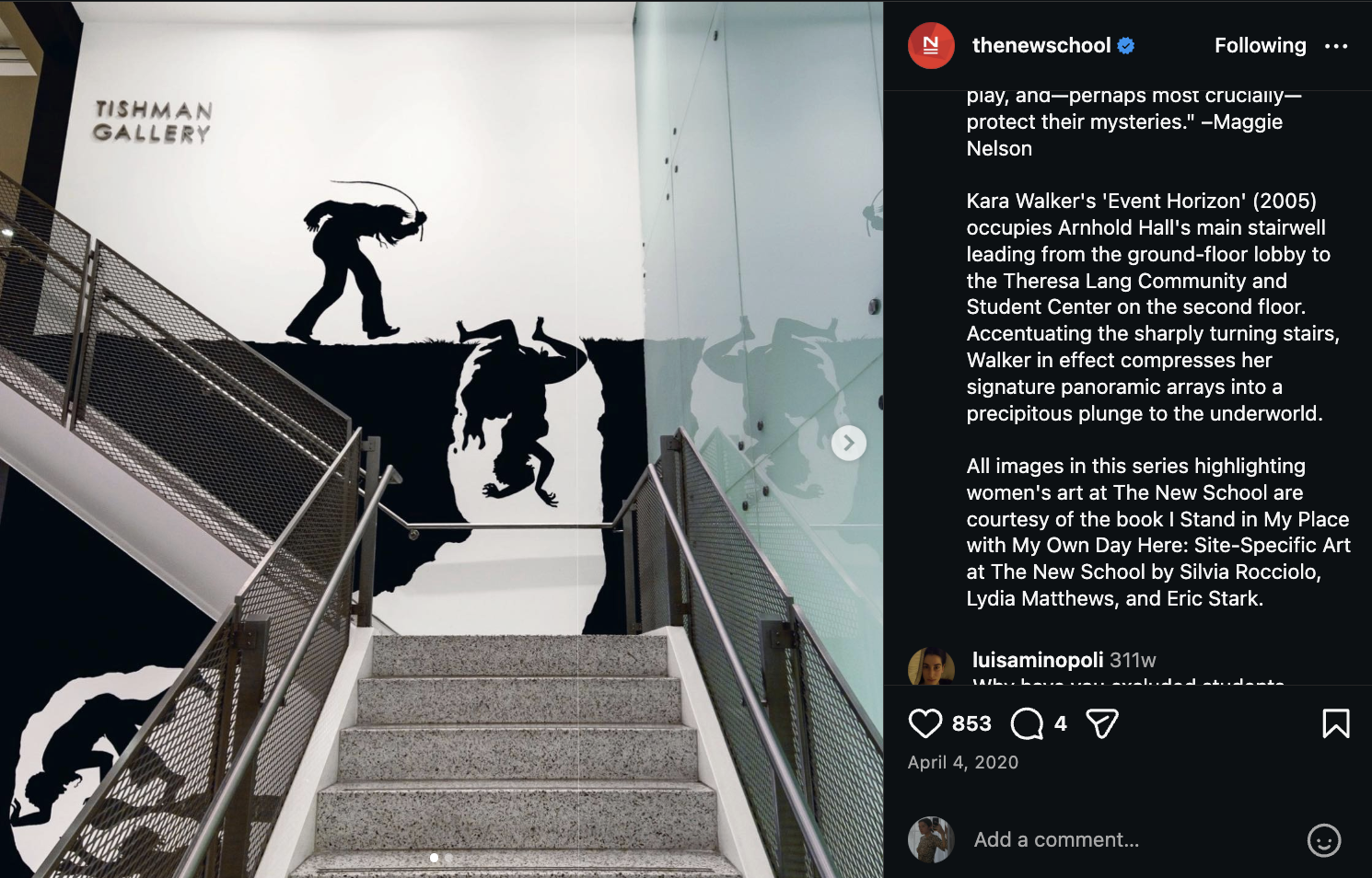
I stumbled upon Kara Walker’s Event Horizon as I walked the steps to my first day of my last semester at the New School. I recognized her violent black-on-white exaggerated silhouettes immediately, their scale and curves, but most prominently, their violent caricatures, are unmistakable. I would recognize her work anywhere. The first time I stumbled upon these depictions I was in a circular room, a room in The Broad, surrounded by mostly White people (noting audience I think is relevant) where she papered the walls with these scenes. I couldn’t stay in the room long, it felt “wrong” to look. I believe this is the point: to makes White folks sit in that discomfort and reality. I noticed how many tried to keep composure while looking at these scenes (why bother?). Event Horizon, though, is not in a museum. What makes this particular work unique is its placement: latex paint mural-ing the hallways of a college campus building.
There is a usefulness in Kara Walker’s remembering. As the name of the work suggests, there is an erasure of histories, a flattening of Blackness in the US, and a literal “black hole” in the memory of the United States chattel slavery. Event Horizon itself is in reference to this emptiness - it equates the erasure to the theory of a gravitational pull so strong around a black hole that no light or radiation can escape it. There are missing records, missing oral traditions. Kara Walker’s black (often [B]lack, but not always) figures re-create these fictionalized histories in a folkloreish narrativizing aesthetic.
However, I can’t help but wonder if the usefulness only goes so far. At what point does her work become a version of trauma porn? And in what contexts and with whom is it useful to engage this violence critically and thoughtfully? This is a question of curation, and location, I think.
A Black friend, deep in contemporary art scenes, is a skeptic: “whenever White people like a Black artists’ work so much, especially work depicting violence, I generally become skeptical, who is it actually serving?” At the time we had been talking both about Arthur Jafa and Kara Walker.
My partner, also Black, stated “whenever I see art made by my people like [that of Kara Walker’s], I can’t help but think it as an outlet for their trauma, and that it might not serve much of a purpose outside of that. It’s…pain. Pain that has the potential to be translated or wielded by Whiteness.”
I think these are important questions. Legacy Russell, in Black Meme, re-iterates the pre-internet virality of Black violence in the form of lynching postcards. These cards were collected and prized by White folks, and en masse. Do these depictions just add to the virality of Blackness as circulated by White folks for White consumption? Are White people actually uncomfortable with this violence, and do they see themselves in it? Is the violence normalized internally, and unnoticed? How are these images felt and embodied by a Black audience? The answers are hazy, especially for the latter. Is anyone even asking how Black students feel?
When a piece is controversial or a conversation starter does not necessitate it is a thoughtful choice. “Thoughtful” here I describe as asking questions like : what is the affect on those who (have to) walk by this work each day if they teach or study here? How will they be engaging with it? It’s worth noting that the viewing and engaging is done with or without consent.
It feels prudent to describe this work in more detail. Maggie Nelson, in a response essay, noted that the first scene you see is “a female figure (inflated butt, iconic head rag) appears to be fisting or stuff a man’s butt, her hand disappeared up to her forearm. The man appears legless, reaches up in agony. She is studious, patient, in the face of his suffering.”
Descriptions of the sexual violence are often missing in write-ups and reviews. Other scenes, each displayed in layers in a Dante-esque wormhole up two flights of steps (on both the East and West walls) are: a presumably White man at the top whipping a woman who is falling (in agony to her presumed death), two folks who play a handclap game (complacent or distracted), a young child with a doll (both barely holding themselves from falling…(into what, we do not know, but it is ominous), amongst others. Many of this figures are presumed Black by their notably exaggerated stereotyped features that Kara Walker so often employs.
Stefano Basilico, who commissioned this piece for the New School in 2003, is White. I am skeptical of his care in his decision. His Whiteness does not ensure his unthoughtfulness (Basilico’s predecessor as the head of the Committee for the University Art collection was Kathleen Goncharov - she acquired pieces by Adrian Piper, Dorothea Rockburne, Lorna Simpson, Nancy Spero, and Carrie Mae Weems - in a way that feels much more responsible to the students and the artists). BUT his Whiteness, and frankly his maleness, does make it more likely, and also makes him, as they both were, a gatekeeper of Black art and money for Black artists.
There are indeed many usefulnesses in discussing and “listening to images” (Tina Campt). There is not always a usefulness in looking at these images. At least, not in every context.
In an interview on NPR Radio on March 7, 2008, African-American talk show host Farai Chideya quoted Betye Saar’s criticism:
“I felt the work of Kara Walker was sort of revolting and negative and a form of betrayal to the slaves, particularly woman and children, and that it was basically for the amusement and the investment of the white art establishment.”
Walker’s response:
I think the first thing that’s striking to me is that I’m not making work about reality. I’m not. I am making work about images, you know, I am making work about fictions that have been handed down to me, and I’m interested in these fictions because I am an artist, and any sort of attempt at getting at the truth of a thing, you kind of have to wade through these levels of fictions, and that’s where the work is coming from.”
Excerpted from Kara Walker No/ Kara Walker Yes/ Kara Walker ? (New York: Midmarch Arts Press, 2009).
Event Horizon and its placement in a school creates a liminal space in which we confront a violent America. But at what cost? The comfort daily of Black students in White dominant and White run spaces? Let’s ask.
More information/sources:
https://blog.fabrics-store.com/2019/09/30/kara-walker-a-history-of-violence/
https://thenewschoolartcollection.org/works/kara-walker/history-of-the-commission/
Other notes:
there is no wall text other than the name/artist/year
the official (rather shitty imo) release text: https://www.newschool.edu/pressroom/pressreleases/2005/042605_nsu_walkerk.html
Clarice Lispector + Susan Stryker
fragments
Talking Monsters.
No. 02
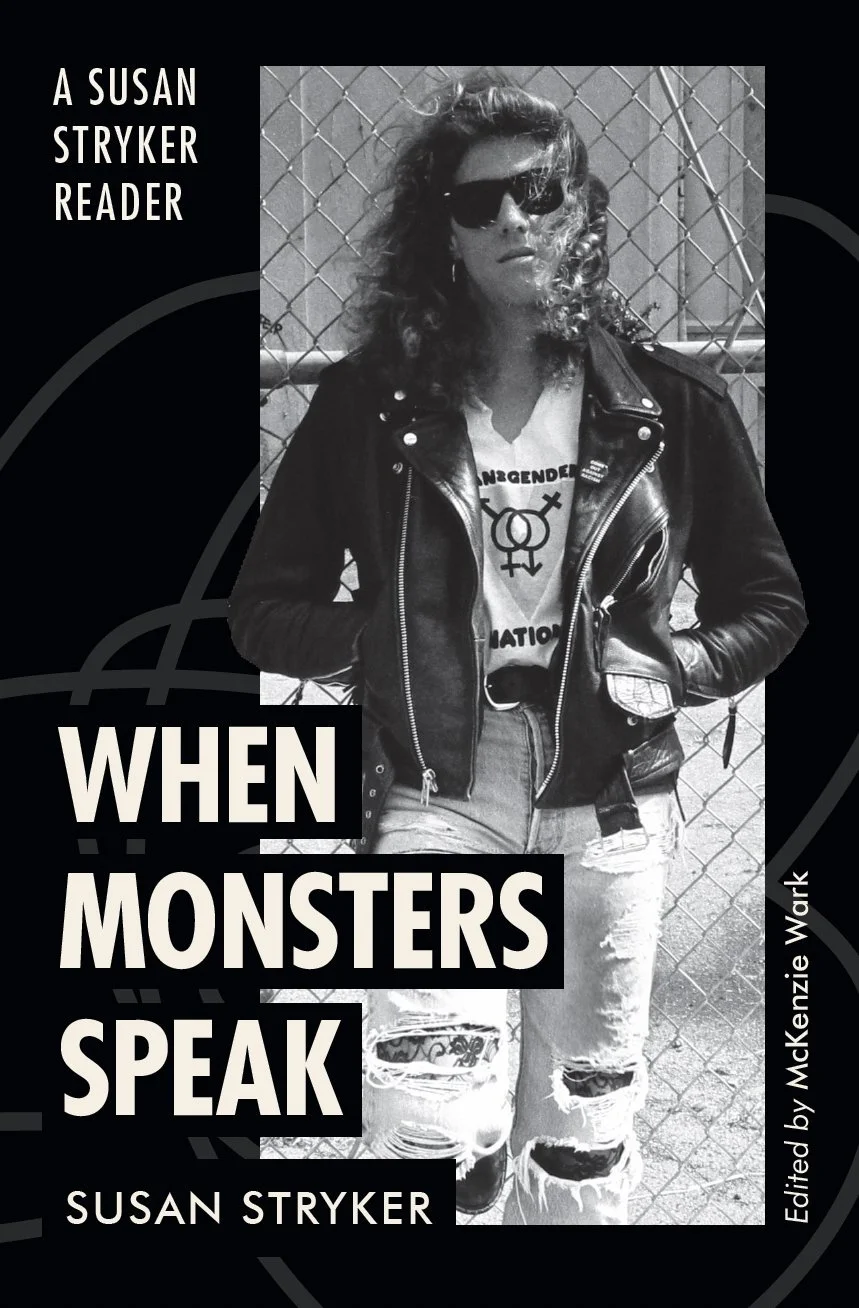
A conversation with Clarice Lispector via Agua Viva and Susan Stryker…with a touch of Mckenzie Wark.
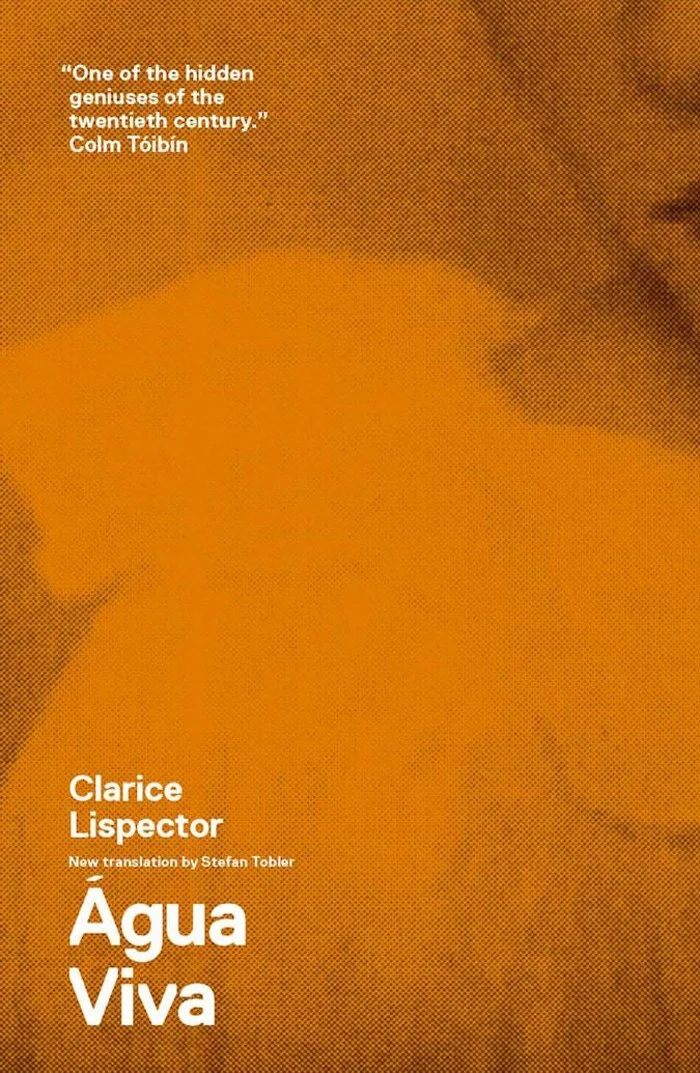
I don’t like gender. It doesn’t feel exploratory. To be “read as ___” is boring, and falsely assumptive to me. It negates the work of learning and knowing another, it negates the necessity of curiosity. It assumes too much and does too much work that then inevitably is undone. Or if it is not it flattens and mimics. Maybe my mind will change. Most thoughts do. Or they mutate to be premised in meaninglessness. But i also need you to not need or expect me to change my mind. This is important.
Reading Stryker I wondered out loud whether monster was useful for us to identify with the Other as liberatory practice. Wark said of course. For some reason this made me angry. Stryker said it is like reclaiming whore or slut or gay. No it’s not. It’s not. Maybe it’s still useful to Be Monster, but it’s not the same. To be gay whore slut is only bad or wrong if the thing it describes is assumed bad or wrong. The terms themselves are not indicative of a description of “badness” itself. Monster - is. Monster reflects the subjective speaker. It does the work of communicating that which is harmful, ugly, and feared. It does not generate or prescribe specific actions or traits as whore slut gay do. Monster does the work of being flexible, to be specifically and exclusively defined by those who use it. Monster is the judgement itself, not the identity or practice that is judged.
I did not say any of this to her. Why would I when I wouldnt be heard. And Wark did not explain or change my mind. I was disappointed by this. I learned nothing. I changed my mind later. I changed my mind when I embraced the monster for myself because i didnt want the human described as human by those who use Monster. Which is almost exactly what Stryker said. id rather be the creature they feared. i would rather be the thing feared than the boundaried saltless human they want. To them, I am a monster and she is a monster. But, to me, so are you. And so the speaker of Monster is Monster. They just don’t know it yet. Which really means we are all human again too. It all is the same metaphor for the same creature. Mary tried to tell us.
Monster isn’t a slur to be reclaimed, it is diagnostic of the speaker, diagnostic of their prescription of “human.” But as with gender and race and most things, human and monster equally drift, shift, blur, glitch, slide, drip.
Boundarilessness is wordlessness.
Sometimes it’s hard to speak words when words mean everything and never nothing.
How can I speak when not all can hear and how can I gesture when not all can see and how can I touch when not all can feel and how can I whisper when you are so far and how can I shout when the wind snatches thought and how can i write when youre not there. And how can i share when i cannot feel. What is left to be said, communciated, shared when it is all and all everything and you already know anyway?
Like photoshop attempting to distinguish one pixel from the next to form an edge, a selection. How often it gets those pixels wrong. A corner of a nose blends with the skin of another’s stomach. Even when we tell it which pixels to look for a shirt rubs off on the moon. How can I gender when it’s boundariless and how can i race when it fictious except for how we live it in body against body atom against atom and so we speak in poems and riddles and metaphors and analogies and monsters and words. And so words become genders become races become types become categories become All of us monsters, but not all of us Narccissus. That is the secret. We are all monsters. But speaking to no one. But us.